What is a Voltage Sensitive Relay?
Voltage stability plays a decisive role in determining the service life and operational efficiency of equipment across every electrical installation. Within these networks, the voltage relay acts as an indispensable automated protective "shield," continuously monitoring and regulating voltage levels. What exactly is a voltage sensitive relay, and how does it operate? Our comprehensive guide below provides the answers.
What is a Voltage Sensitive Relay?
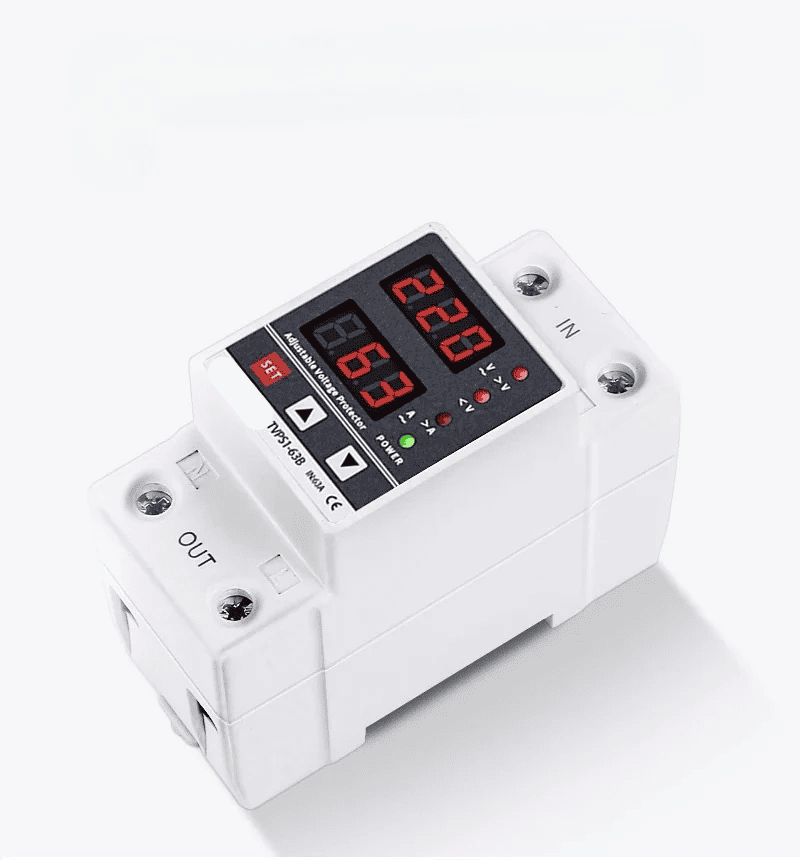
A voltage sensitive relay is an automated electronic or electromechanical protective device designed to continuously monitor voltage levels within an electrical circuit or piece of equipment. When actual grid voltage exceeds the upper permissible limit (overvoltage) or drops below the safe threshold (undervoltage / brownout), the relay automatically trips to interrupt the circuit or triggers an alarm signal—protecting costly downstream loads against burnout, insulation breakdown, and premature aging.
Detailed Construction of a Voltage Sensitive Relay
Although voltage sensitive relay are engineered across various technologies (ranging from electromechanical induction-disc models to digital microprocessor-based relays), a standard unit comprises the following core assemblies:
- Sensing and Comparator Circuit: Continuously measures incoming supply voltage and compares it against preset reference thresholds.
- Output Contacts: Comprises Normally Closed (NC) and Normally Open (NO) relay contacts. Upon voltage excursion beyond preset thresholds, these contacts switch states to trip downstream circuit breakers or contactors.
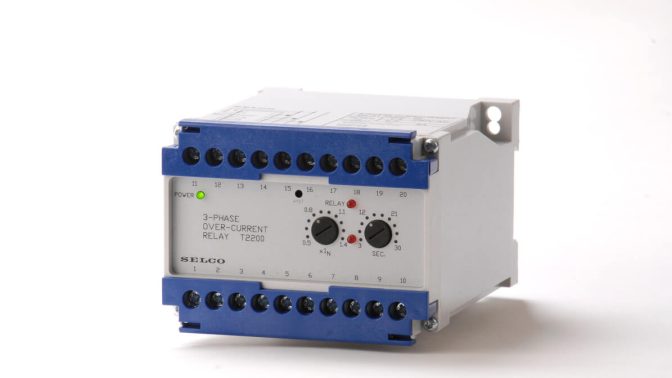
- Display Screen and Adjustment Potentiometers / Controls (for digital/electronic models): Allows technicians to precisely configure overvoltage thresholds, undervoltage thresholds, and time-delay settings tailored to actual system requirements.
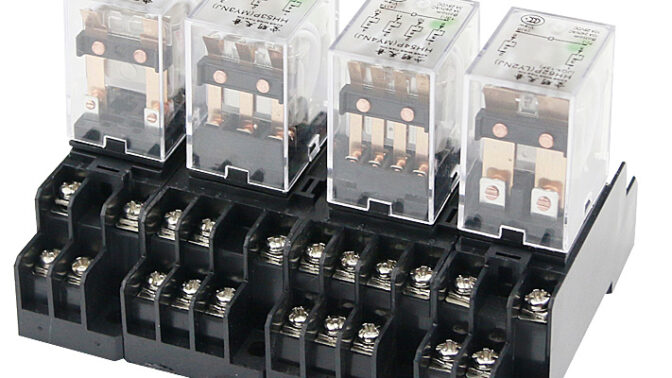
- Protective Enclosure and Socket Base: Molded from high-temperature, flame-retardant insulating thermoplastic to shield internal PCBs from dust, humidity, and external mechanical impacts.
Operating Principle of a Voltage Sensitive Relay
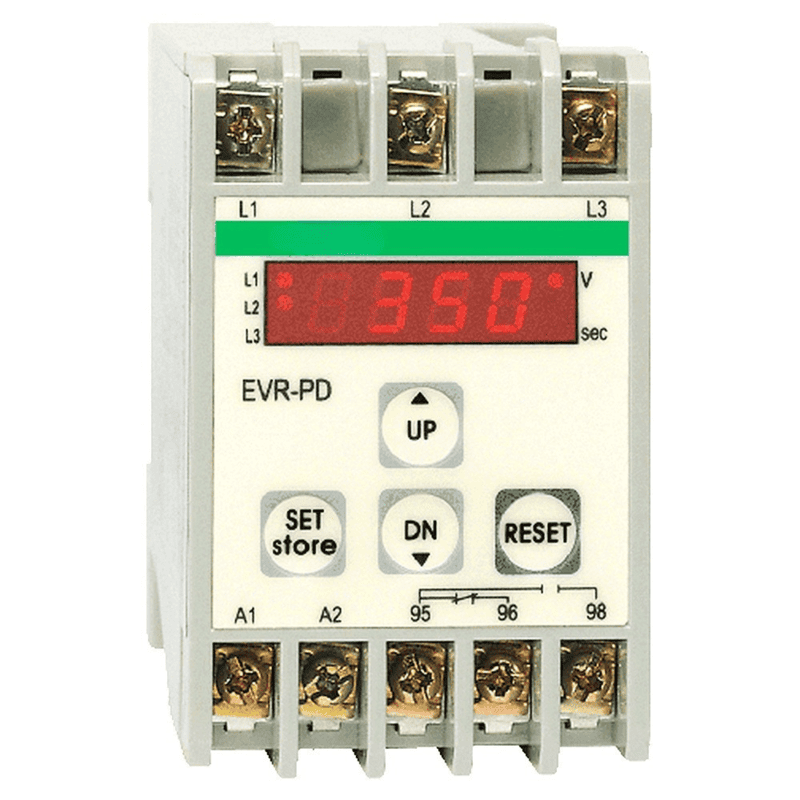
The operating principle of a voltage sensitive relay relies on comparing real-time grid voltage against calibrated reference setpoints configured on the device:
- Normal Operating State: When supply voltage remains within the permissible operating band, the relay holds its energized steady state, maintaining closed contacts to supply uninterrupted power to the connected load.
- Fault Condition (Overvoltage / Undervoltage): When line voltage experiences a sudden surge or severe voltage dip, the internal sensing circuit registers the threshold violation.
- Circuit Interruption (Tripping): A trip signal immediately actuates the output relay coil or solid-state switch to toggle contact states, isolating power from the downstream load. Modern electronic relays incorporate configurable trip time delays to prevent nuisance tripping during harmless momentary voltage sags.
- Automatic Reclosing / Recovery: Once grid voltage returns to the safe operating window and remains stable for the duration of the preset reconnection delay, the relay automatically re-closes its contacts to restore power to the system.
Functions of a Voltage Sensitive Relay in Electrical Systems
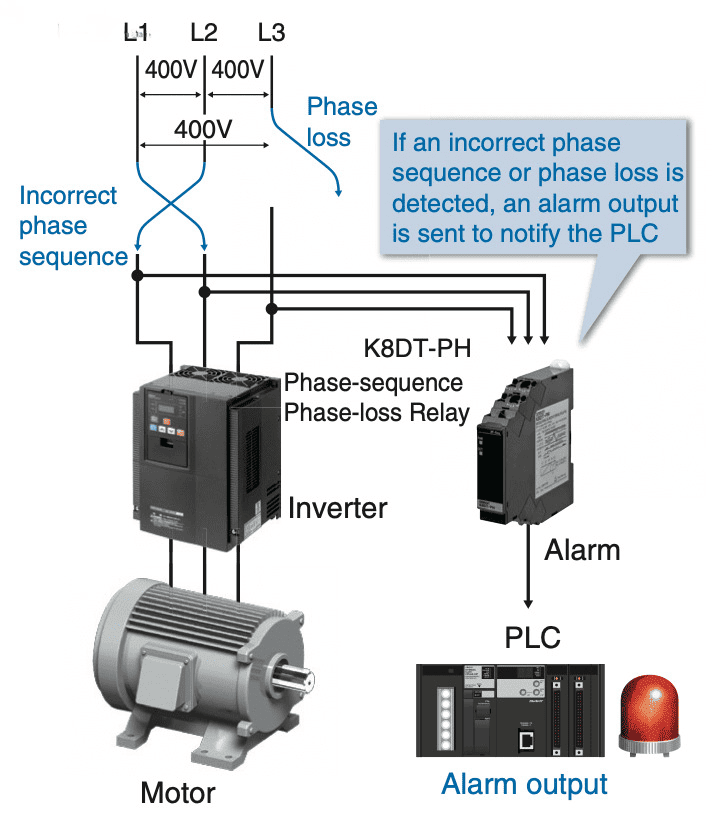
Beyond basic voltage telemetry, a voltage sensitive relay acts as a critical protective barrier to:
- Overvoltage Protection: When grid voltage spikes abruptly due to lightning surges, distribution transformer faults, or neutral-loss events, the relay trips rapidly—preventing excessive current from destroying control boards, motor windings, or sensitive electronic components.
- Undervoltage and Brownout Protection: Sustained voltage dips cause motor-driven appliances (such as air conditioner compressors, refrigerators, and water pumps) to stall or draw excessive locked-rotor current, resulting in severe overheating and winding burnout. A voltage relay disconnects power promptly to eliminate this hazard.
- Maintaining Operational Stability and Safety: Automatically sheds loads during power anomalies and restores power only after grid conditions have fully stabilized within safe parameters—eliminating rapid chattering (repeated on-off cycling) that causes severe electrical and mechanical shock to machinery.
Common Classification of Voltage Sensitive Relay
Voltage sensitive relay are categorized into three primary types:
- Overvoltage Relay (ANSI Device 59): Dedicated to tripping circuits when input voltage rises above safe limits, protecting sensitive electronics such as washing machine control boards, refrigerators, and televisions.
- Undervoltage Relay (ANSI Device 27): Safeguards equipment when supply voltage drops below acceptable operating margins, preventing motor stalling, thermal overload, and winding failure.
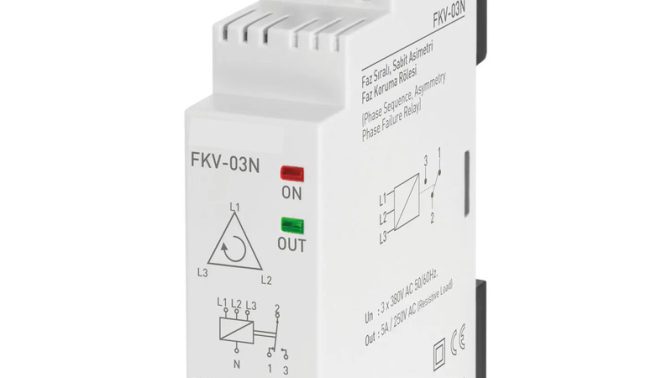
- Phase Monitoring Relay: Primarily deployed in three-phase networks to detect phase loss (single-phasing), phase reversal (incorrect phase sequence), and phase voltage asymmetry (unbalance).
Applications of Voltage Sensitive Relay
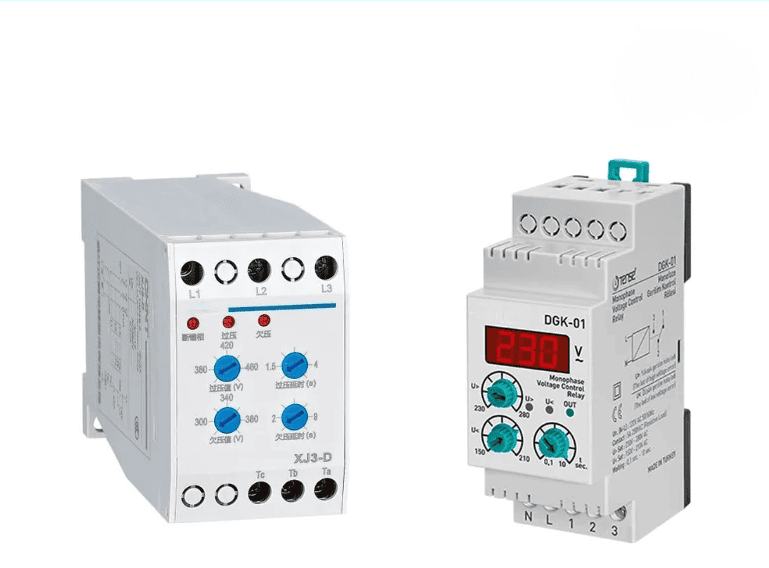
Thanks to their rapid, accurate response to voltage fluctuations, voltage sensitive relay are widely deployed across both residential distribution boards and heavy industrial installations.
In Residential Electrical Systems
- Protecting HVAC and High-Value Home Appliances: Installed as whole-home main surge/voltage protectors or dedicated individual guards for sensitive loads—such as refrigerators, air conditioners, washing machines, and televisions—particularly in end-of-line rural grids prone to peak-hour voltage drops.
- Protecting Automatic Water Pumping Systems: Integrated with liquid-level relays and pump control panels to cut power during unstable supply conditions, preventing pump motors from burning out due to low-voltage stalling.
In Industrial Electrical Systems and Manufacturing Plants
- Protecting Control Cabinets and Automated Production Lines: Continuously monitors supply feeds to CNC machines, conveyor systems, and industrial robotics to prevent unplanned downtime or drive damage caused by voltage transients.
- Three-Phase Motor Protection via Phase Monitoring Relays: Deployed on three-phase feeders to detect phase loss, phase sequence reversal, and voltage unbalance—preventing reverse motor rotation and stator winding burnout in high-horsepower three-phase motors.
- Solar Photovoltaic (PV) Systems: Monitors grid-tie voltage parameters at solar inverter interconnection points and step-up substations to ensure grid compliance, power continuity, and anti-islanding safety.
- Healthcare Facilities: Safeguards mission-critical medical diagnostic and life-support equipment—such as CT scanners, MRI systems, and patient monitoring consoles—against grid voltage anomalies.
Frequently Asked Questions
Question 1: What is the primary difference between a voltage sensitive relay and an automatic voltage stabilizer (AVR)?
Answer: An automatic voltage stabilizer (AVR) actively regulates and steps up/down fluctuating input power to maintain a constant nominal output voltage (e.g., 220V on a single-phase line). Conversely, a voltage relay does not regulate or boost voltage; instead, it functions purely as a protective cut-off device that immediately disconnects power when voltage breaches dangerous thresholds, and automatically reconnects power once the grid stabilizes.
Question 2: Why do residential areas in remote or end-of-line regions require voltage sensitive relay?
Answer: In remote regions or at the far ends of long distribution feeders, high line impedance frequently causes severe voltage drops during peak evening hours, as well as sudden overvoltage surges when large nearby industrial plants shed heavy loads. Installing a voltage relay protects expensive household appliances from motor burnout and PCB failure caused by unstable grid conditions.
Question 3: How do you accurately configure overvoltage and undervoltage setpoints on an electronic voltage sensitive relay?
Answer: Base your settings on the rated operating voltage tolerance specified on the load's nameplate (typically 220V 士 10%). On the front dial of the electronic voltage relay, set the overvoltage trip threshold approximately 10% to 15% above nominal voltage (around 240V–250V) and the undervoltage trip threshold 15% to 20% below nominal (around 175V–185V). Additionally, configure a reconnection time delay of 3 to 5 minutes for compressor-driven appliances (such as refrigerators and air conditioners) to allow refrigerant pressures to equalize before restarting.