What is a Relay? Construction, Operating Principle, and Classification of Electrical Relays
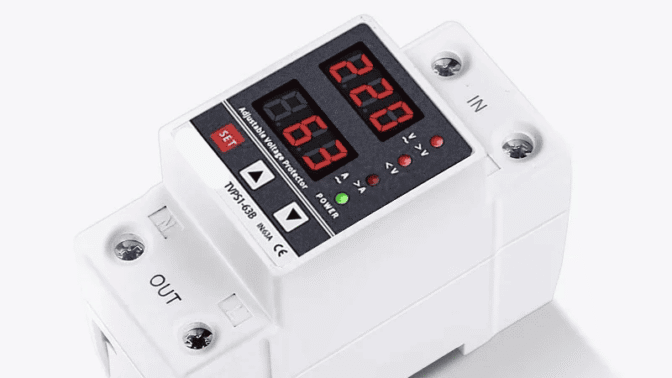
Electrical and electronic components are indispensable across every power network—from transmission and distribution grids down to end-user consumption. Among them, the electrical relay is a widely deployed switching and protective component responsible for circuit control and monitoring. Below is a comprehensive overview of electrical relays and their common classifications compiled by BTB Electric.
What is a Relay? Construction of an Electrical Relay
A relay is an industrial electrical switching device used to sense, receive signals, and control a high-power electrical circuit via a low-power control signal. Essentially, a relay switches load currents significantly greater than the low-level input current energizing its control circuit.

Fundamentally, an electromechanical relay consists of an electromagnet (operating coil) and switching contacts, engineered into various modular configurations depending on application requirements. Its functional architecture comprises three primary blocks:
- Sensing / Input Block: Receives input quantities—such as thermal energy, current magnitude, or voltage levels—converting them into measurable parameters to transmit to the intermediate stage.
- Intermediate / Comparator Block: Processes the input signal from the sensing stage and actuates the output mechanism. The electromagnetic operating coil is typically housed within this stage.
- Actuating / Output Block: Executes switching commands received from the intermediate block to make or break the controlled circuit. The relay's electrical contacts are located in this block.
Functions of an Electrical Relay
An electrical relay uses a low-power excitation signal to switch a substantially larger load circuit, enabling low-voltage control electronics to govern high-power machinery safely. In practical engineering applications, relays perform the following functions:
- Circuit Protection: Promptly trips and isolates circuits upon detecting fault conditions—such as overcurrent, overvoltage, thermal overload, or undervoltage—safeguarding downstream equipment.
- Signal Multiplication and Distribution: Splits and routes a single control signal to multiple independent devices within an automation panel.
- Load Transfer / Switching: Switches power between different loads or supply paths in response to control commands.
- Threshold-Based Switching: Opens or closes load circuits according to preset electrical or timing parameters (such as current limits or time delays).
- Relay Logic Execution: Implements foundational Boolean logic gates (NOT, OR, AND) for hardwired control systems and automated safety interlocking.
General Operating Principle of a Relay
Most electromechanical relays operate on the following core principle:
- When a low-level control current flows through the primary input circuit, it energizes the internal electromagnetic coil, generating a magnetic field. This magnetic flux attracts or actuates an armature to toggle the contacts in the secondary circuit, switching a much higher current to the downstream load.
- When the control current is interrupted, the electromagnet de-energizes and the magnetic field collapses. A mechanical return spring immediately pulls the armature and contacts back to their normal resting positions.
For relays utilizing Normally Closed (NC) contacts, energizing the electromagnet opens the contacts and interrupts current flow. Conversely, for relays utilizing Normally Open (NO) contacts, energizing the electromagnet closes the contacts and allows current to flow to the load.
Common Types of Electrical Relay
Modern relays are manufactured in numerous variants tailored to residential electronics, industrial automation, and utility transmission networks. They are classified by function, polarity, contact mechanism, and connection topology:
Classification by Function
- Thermal Overload Relay: Measures thermal buildup (via bimetallic strips or electronic thermal modeling) to protect motors against sustained overloads.
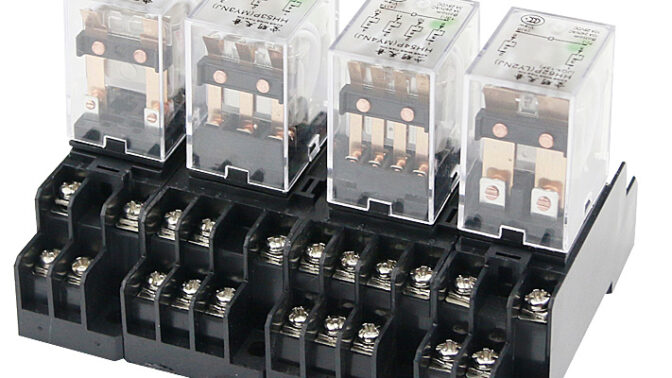
- Electromagnetic Relay: Utilizes an electromagnetic coil and mechanical armature to open or close physical contacts.
- Solid-State Relay (SSR): Uses semiconductor switching components (such as thyristors, TRIACs, or MOSFETs) to switch circuits silently with no moving parts.
- Timer Relay (Time-Delay Relay): Opens or closes contacts after a predetermined, configurable time interval.
- Intermediate Relay (Control Relay): Acts as a signal buffer and contact multiplier interconnecting pilot devices in automated control panels.
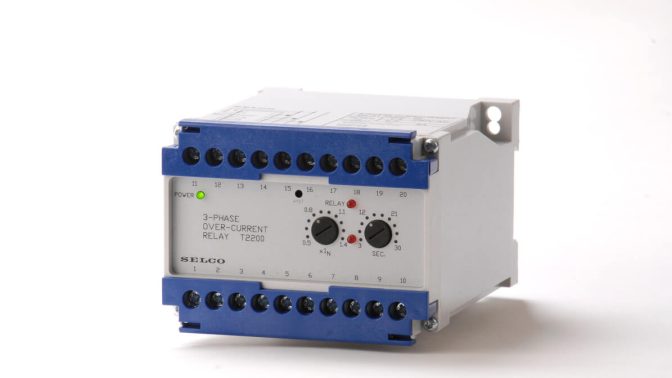
- Overcurrent Relay: Monitors circuit current and trips when current exceeds preset pickup thresholds due to overloads or short circuits.
- Phase Failure Relay: Detects phase loss (single-phasing), phase reversal, or phase unbalance in three-phase systems to trip the main contactor.
Classification by Coil Polarity
- Polarized Relay: Incorporates a permanent magnet alongside the electromagnet; armature movement depends on the polarity of the DC input signal.
- Non-Polarized Relay: Features a non-polarized coil that actuates regardless of the polarity of the applied input voltage.
Classification by Contact Mechanism
- Electromechanical Contact Relay: Physically opens or closes metallic contact pairs to make or break circuit continuity.
- Static / Contactless Relay: Switches or regulates circuits without mechanical contacts by abruptly altering electrical parameters such as inductance, capacitance, or resistance.
Classification by Circuit Connection
- Primary Relay: Connected directly in series or parallel with the main power circuit being protected.
- Secondary Relay: Connected indirectly to the monitored power circuit via instrument transformers—specifically Current Transformers (CTs) or Potential/Voltage Transformers (PTs/VTs).
Practical Applications of Relay
Relays are widely deployed to distribute control signals across complex automation loops and serve as output isolation interfaces—providing galvanic isolation between high-voltage AC power loads and sensitive low-voltage DC control electronics.
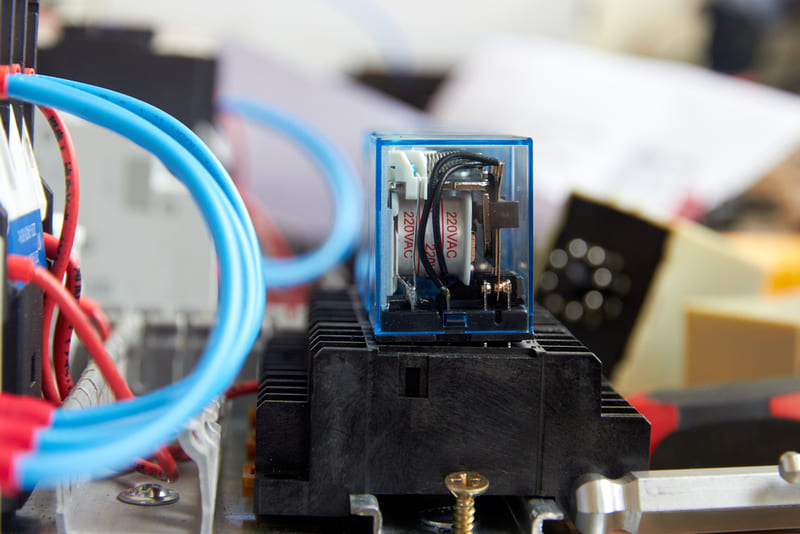
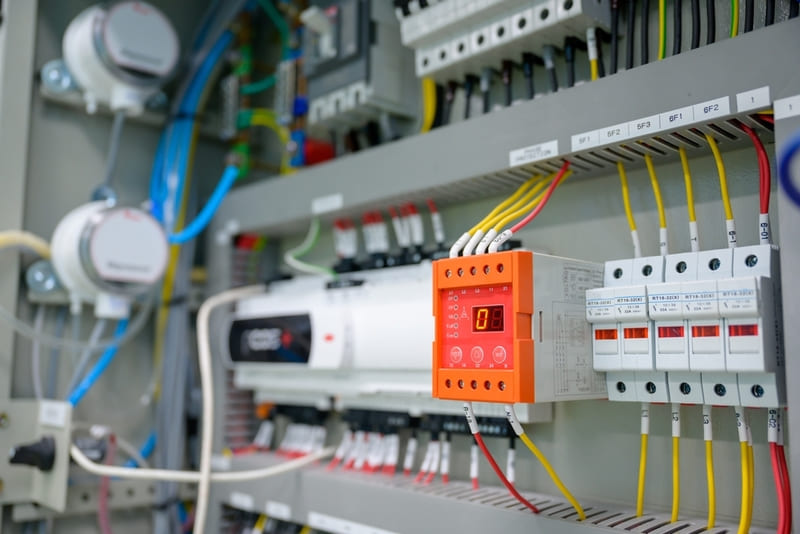
They are integral to residential appliances and industrial automation systems requiring high operational reliability, protecting machinery against electrical faults and process anomalies. Relays are routinely interfaced with the outputs of PLCs, HMIs, sensors, automated production lines, process monitoring panels, and sequential control systems.
BTB Electric currently manufactures two specialized industrial relay lines: BTB Electric Thermal Overload Relays and BTB Electric Power Factor Controllers (Automatic Capacitor Bank Regulators). All products comply with international IEC/EN standards and are certified by leading independent testing laboratories including Underwriters Laboratories (UL), DEKRA, and Intertek.
Explore detailed product specifications at: