26-11-2026
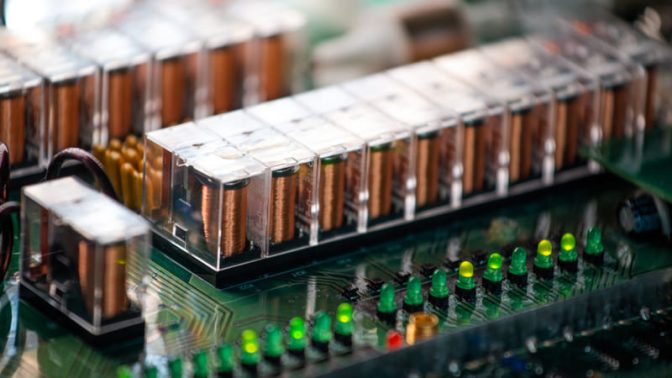


A harmonic filter is an electrical device designed to eliminate harmonics in an electrical signal. There are many types of harmonic filter such as active harmonic filter and passive harmonic filter. In this article, we focus on providing information about active harmonic filters - the most efficient single-device harmonic filtering solution for industrial power systems.
An Active Harmonic Filter (AHF) is a highly advanced, microprocessor-controlled power quality device designed to dynamically mitigate electrical harmonics in industrial power systems.Unlike traditional passive filters that use fixed capacitors and inductors, an AHF actively monitors the network in real-time, calculates harmonic distortion, and injects an equal but opposite anti-phase current to cancel out harmonic interference from the 2nd up to the 50th order.
Beyond harmonic mitigation, modern AHFs act as comprehensive power quality conditioners, providing dynamic reactive power compensation and 3-phase load unbalance correction in a single, compact unit.
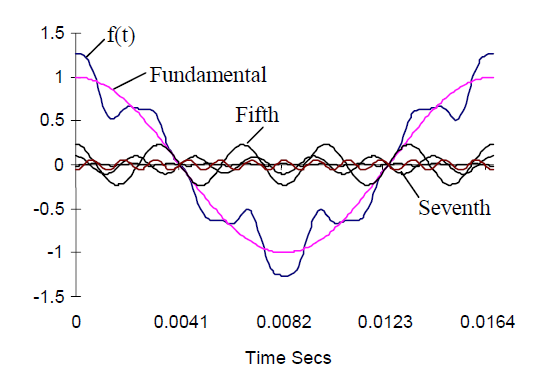
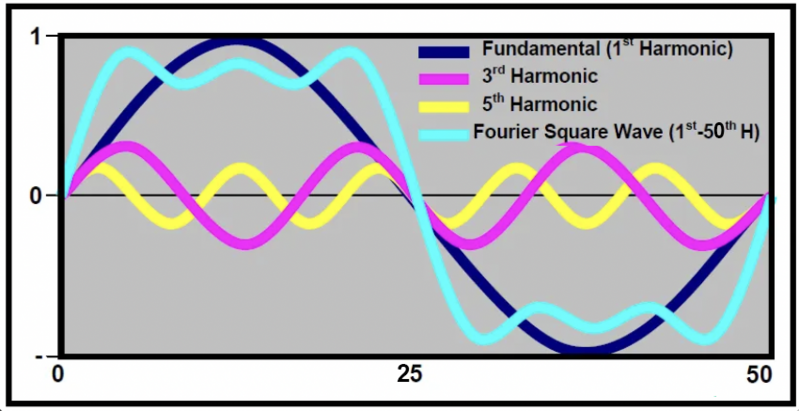
Harmonics are waveforms that have a frequency n times that of the fundamental waveform in an electrical system. Harmonics interfere with electrical devices operating at a fundamental frequency (50Hz or 60Hz), creating noise that causes energy loss and reduced performance. The harmonics produced in the power system cause AC waveforms to deviate from the ideal sine shape, called distortion waveforms or complex waveforms.
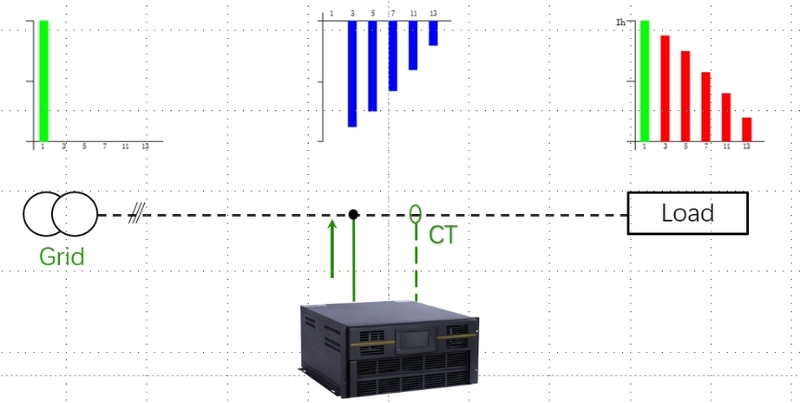
Active harmonic filters are connected in parallel in the grid, to detect harmonics in the grid in real time, generate reverse phase compensation current through the converter, and automatically filter harmonics in the grid. The operation of AHF is not affected by the grid structure and type of load, and it will not create harmonic oscillation with the system, thus realizing perfect harmonic control of different loads.
The superior performance of an AHF relies on high-speed solid-state electronics operating in a three-step continuous loop:
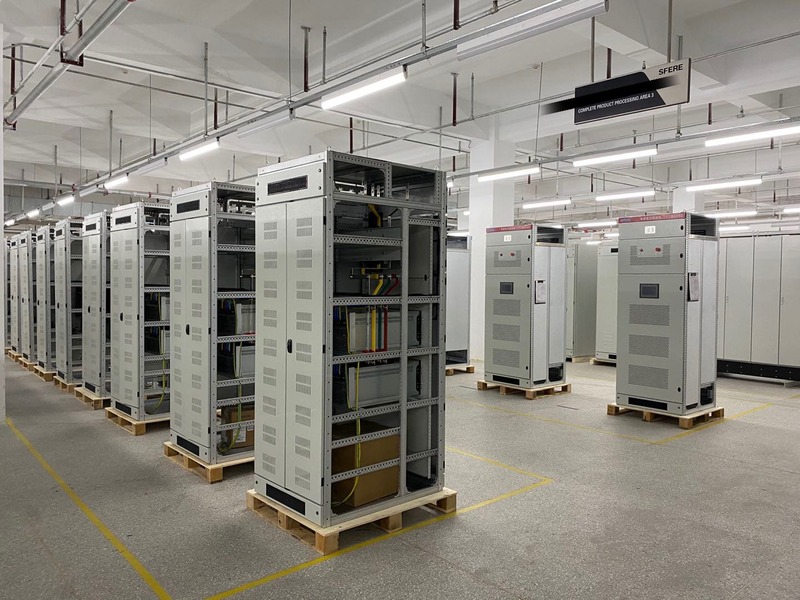
Almost every modern solution designed to increase energy efficiency relies on non-linear electronics, which inherently generate harmonics. Common sources include Variable Frequency Drives (VFDs), uninterruptible power supplies (UPS), HVAC chillers and large-scale LED lighting networks. Installing an Active Harmonic Filter is the most robust method to protect internal power infrastructure. Today, AHFs are heavily deployed across:
Active Harmonic Filters (AHF) and Passive Harmonic Filters (PHF) are two distinct harmonic mitigation solutions that differ fundamentally in operational technology, dynamic load tracking capabilities, and capital expenditure (CAPEX). Refer to the comparative breakdown below:
| Criteria | Active Harmonic Filter (AHF) | Passive Harmonic Filter (PHF) |
| Operating principle | Injects an equal and opposite (180° phase-shifted) compensating current in real time. | Uses tuned LC circuits (inductors and capacitors) to shunt specific frequencies to ground. |
| Filtering performance (THDi) | Very high (THDi < 5%). Dynamically mitigates all orders (2nd to 50th) simultaneously. | Moderate (THDi 10% - 15%). Mitigates only predetermined orders (e.g., 5th, 7th). |
| Dynamic load adaptability | Adapts seamlessly across all load profiles (from 0% to 100% capacity). | Performance severely degrades under dynamic or light load variations. |
| Power factor correction & load balancing | Stepless reactive power compensation (cosφ) and dynamic 3-phase load balancing. | Fixed-step reactive power compensation (cosφ) only. |
| Resonance risk | Immune. Acts as an infinite impedance to the grid, avoiding resonance. | High risk. Prone to parallel resonance with system impedance, risking capacitor rupture. |
| Capital cost (CAPEX) | High initial investment | Economical, typically around 25% to 50% the cost of an equivalent-capacity AHF |
Active Harmonic Filters deliver superior filtering performance, dynamic adaptability across changing load profiles, and multi-functional power quality optimization - making them the ideal choice for mission-critical, continuous-duty industrial installations where power quality is paramount. Conversely, Passive Harmonic Filters are suited for smaller, stable loads characterized by predictable profiles where only 1 to 3 dominant harmonic orders require mitigation at a lower initial capital expenditure.
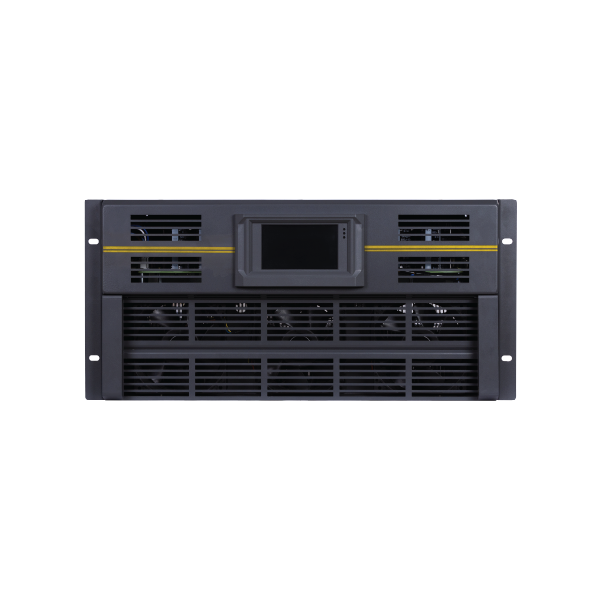
The active harmonic filter from BTB Electric reduces the electromagnetic interference caused by harmonics to avoid deterioration of the power system transmission capacity, ensuring the normal operation of the equipment. The compensated current range is from 50A to 600A, the harmonic filter spectrum is from 2nd to 50th, and the harmonic filtration efficiency is over 97%.
 |
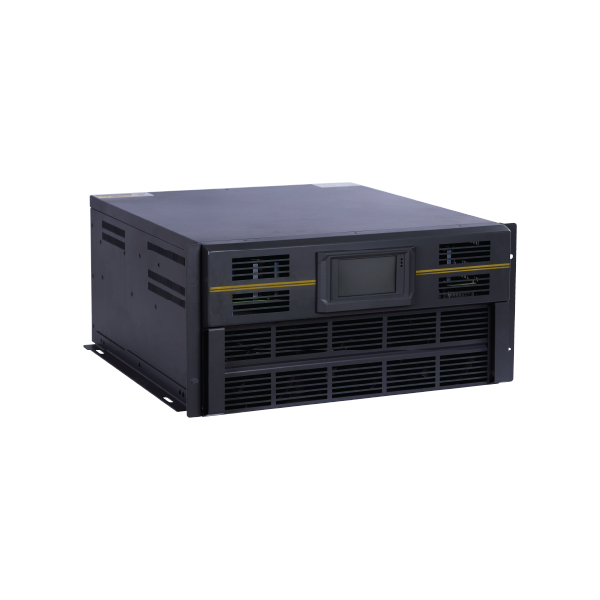 |
We provide 3 designs for harmonic filters: Drawer type, tower cabinet type, and wall mounted type. The product range complies with a series of standards: JB/T 11067-2011, DL/T 1216-2013, IEC/EN 60439-1, 2014/30/EU, EN 61000-6.
Key features :
Application:
1. Can an Active Harmonic Filter (AHF) replace a standard Capacitor Bank?
Yes. Modern AHFs provide dynamic, stepless reactive power compensation alongside harmonic filtering. For highly distorted industrial networks where traditional capacitor banks would be destroyed by harmonics, replacing them entirely with an AHF (or a hybrid AHF + Detuned Capacitor system) is the most reliable engineering solution.
2. Does an AHF consume a lot of electricity?
No. High-quality AHFs utilize ultra-efficient IGBT modules and advanced switching topologies. The internal thermal dissipation and operational losses are minimal, typically accounting for less than 3% of the filter's rated capacity (kVA).
3. How do I size an AHF for my facility?
Sizing an AHF requires a comprehensive Power Quality Audit using a network analyzer. Engineers must measure the Total Harmonic Current Distortion (THDi), the maximum load current, and the required reactive power (kVAr) correction. The AHF amperage rating must exceed the highest recorded harmonic current peak to ensure sufficient cancellation capacity.