26-11-2026
PLC Panel: Components, working principle & guide
A Programmable Logic Controller (PLC) panel is the central nervous system of modern industrial automation. It is a specialized electrical enclosure housing a programmable controller designed to automatically monitor and control industrial machinery and manufacturing processes.
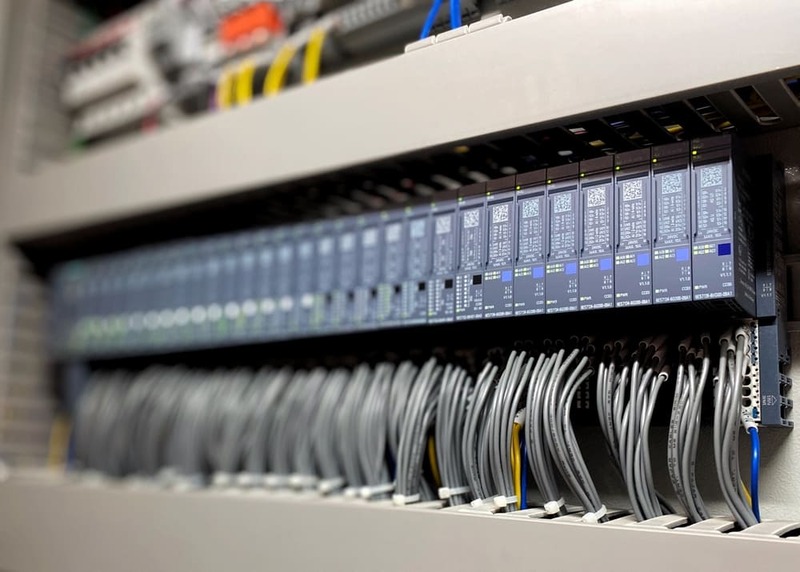
Through logic programming and Human-Machine Interface (HMI) touchscreens, PLC panels eliminate the need for massive banks of hard-wired mechanical relays. They free up human labor, drastically increase operational precision, and enable centralized remote monitoring for complex production lines, warehouses, and commercial building systems.
Core components
A standard industrial PLC control panel houses both the logic controller and the power distribution components required to drive external loads. The PLC Unit:
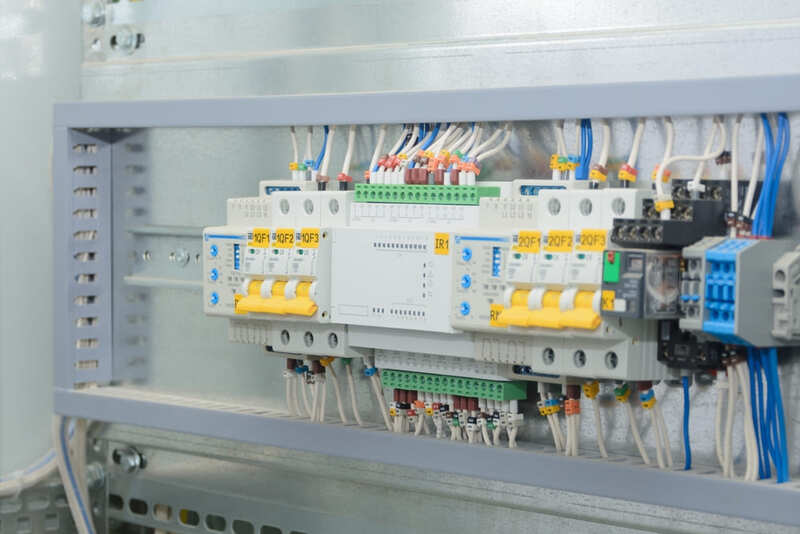
- CPU (Central processing unit): The brain that executes the control algorithms.
- Memory (RAM/ROM): Stores the operating system and user-programmed logic.
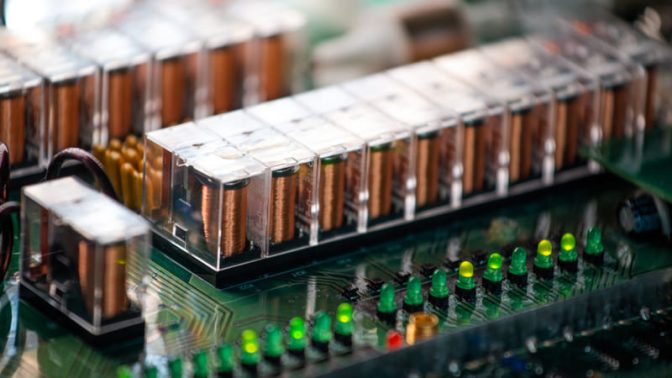
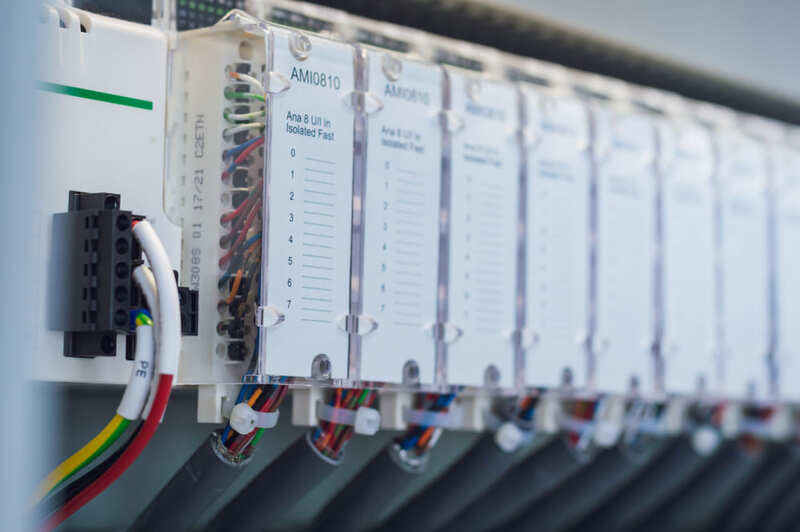
- I/O modules (Input/Output): Digital (DI/DO) and Analog (AI/AO) modules that receive sensor data and send commands to actuators.

Panel switchgear & accessories:
- HMI (Human-machine interface): A touchscreen mounted on the panel door for real-time monitoring, alarm handling, and manual overrides.
- Power supply: Typically converts 220VAC to a stable 24VDC to power the PLC and control circuits.
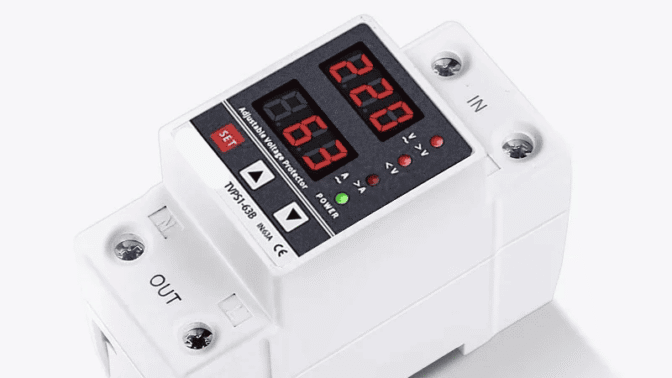
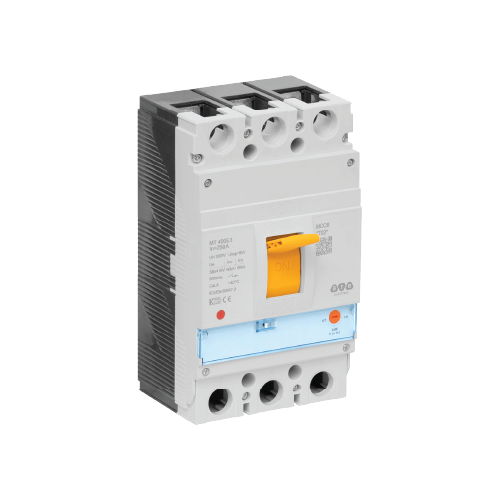
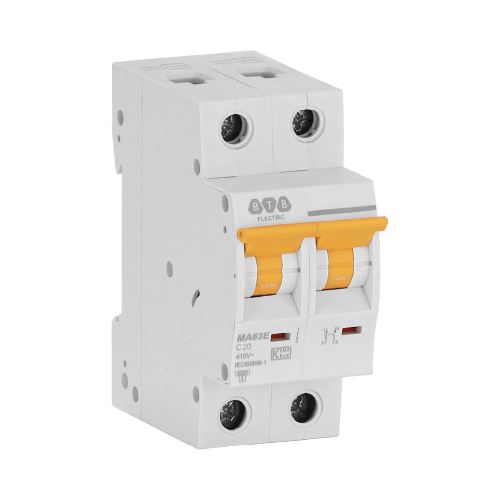
- Circuit breakers (MCB/MCCB): Provides short-circuit and overload protection for the panel components.
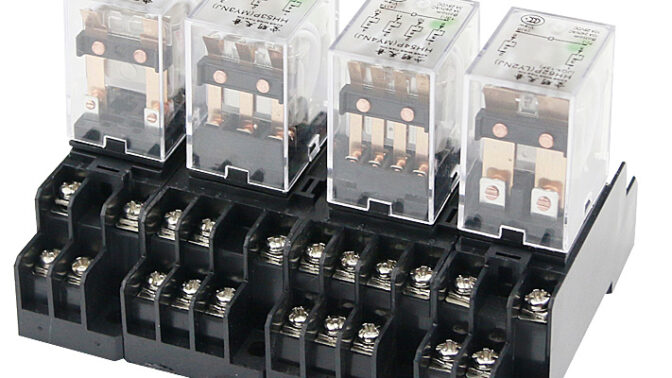
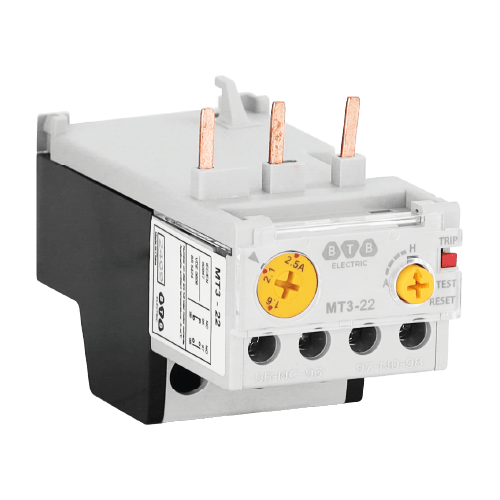
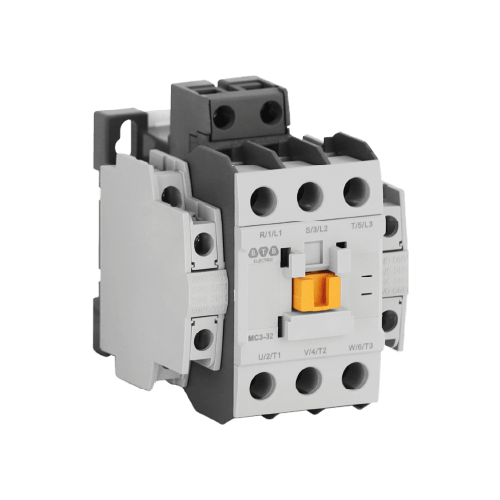
- Contactors & thermal relays: Heavy-duty electromechanical switches used to safely drive high-power motors and pumps based on PLC commands.
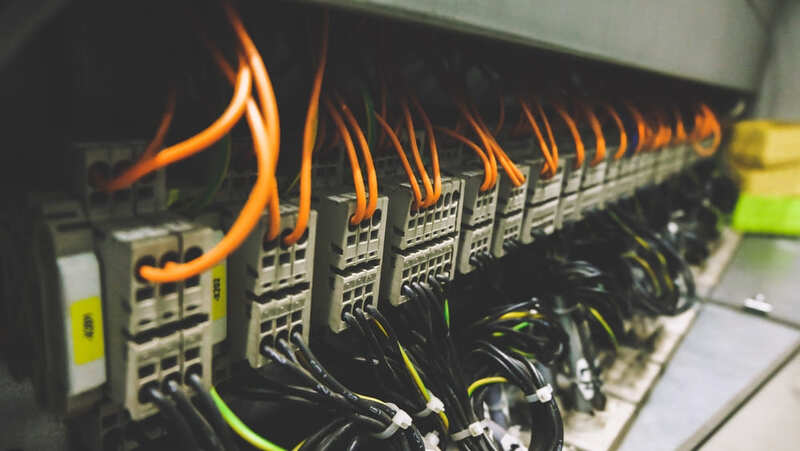
- Control accessories: Selector switches (Auto/Manual), push buttons, indicator lights and terminal blocks for field wiring.

Working principle
The PLC controller operates in a continuous, high-speed loop known as the Scan Cycle, which takes only milliseconds to complete:
- Read inputs: The PLC reads the status of all connected field devices (sensors, limit switches, pressure transmitters) via the input modules.
- Execute logic program: The CPU processes this input data against the user-defined logic (ladder logic, structured text, etc.) stored in its memory.
- Internal diagnostics: The system runs a self-test to ensure memory integrity and hardware health.
- Update outputs: The CPU sends the resulting commands to the output modules, triggering external devices like contactors, solenoid valves and Variable Frequency Drives (VFDs).
Key benefits
Compared to traditional hard-wired relay logic cabinets, modern PLC control panels offer overwhelming advantages for industrial facilities:
- High flexibility: Control logic can be easily modified, updated or expanded via software without the need to meticulously rewire the physical panel.
- Compact footprint: A single micro-PLC can replace hundreds of mechanical timers, counters and relays, drastically reducing the physical size of the enclosure.
- Superior reliability & diagnostics: Solid-state PLC components lack moving parts, eliminating mechanical wear. Built-in diagnostics instantly pinpoint field wiring faults, minimizing troubleshooting downtime.
- Harsh environment resilience: Industrial PLCs are engineered with high anti-interference capabilities, operating reliably amidst severe electrical noise, vibrations and extreme temperatures.
- Scalability: Modular PLC architectures allow engineers to simply snap on additional I/O cards or communication modules as the plant expands.
Key functions & Industrial applications
PLC panels provide unmatched flexibility for industrial automation, executing various control strategies simultaneously:
- Discrete control (On/Off): Automatically starting and stopping pumps, compressors, and conveyor motors based on logic conditions.
- Sequencing & timers: Managing equipment that runs in alternating sequences (duty/standby operation) to ensure even wear and tear across multiple motors.
- Analog & PID control: Processing continuous variables (0-10V or 4-20mA) to modulate Variable Frequency Drives (VFDs) for precise pressure or temperature control in HVAC and wastewater treatment plants.
- SCADA integration: Connecting via industrial protocols (Modbus, PROFINET) to centralized Supervisory Control and Data Acquisition (SCADA) systems for remote facility management.
Today, PLC panels are the standard solution for food and beverage processing lines, CNC machining, printing presses, packaging systems, and heavy industrial plant automation.
Using BTB equipment for PLC panel
The reliability of a PLC panel depends heavily on the quality of its internal electromechanical switchgear. A PLC can execute perfect logic, but if a contactor welds or a breaker fails, the entire production line stops.
![]() |
![]() |
![]() |
![]() |
BTB Electric is a leading manufacturer of premium, IEC-certified industrial electrical equipment. We supply panel builders across Southeast Asia with highly robust components critical for PLC enclosures, including MCBs, MCCBs, contactors and Thermal overload relays. Engineered for harsh industrial environments, BTB Electric components ensure your automated systems execute every command safely and consistently.
FAQs
1. What is the difference between a PLC panel and a relay control panel?
A relay control panel relies on complex, hard-wired physical connections between mechanical relays to execute logic. A PLC panel replaces this physical wiring with software code. This makes PLC panels significantly smaller, easier to troubleshoot and infinitely easier to modify when control requirements change.
2. Do PLC control panels require cooling?
Yes. While the PLC CPU itself generates minimal heat, the power supplies, transformers and Variable Frequency Drives (VFDs) housed within the same panel can generate substantial thermal loads. Depending on the ambient environment, PLC panels typically require filtered cooling fans or dedicated panel air conditioners to prevent component degradation.
3. Can a PLC panel connect to the internet?
Modern PLC panels feature Ethernet ports and support standard industrial IoT protocols (like OPC UA or MQTT). When connected to a secure industrial router, they allow facility managers to monitor live machine data, receive alarm notifications and perform remote troubleshooting from anywhere in the world.