24-12-2025
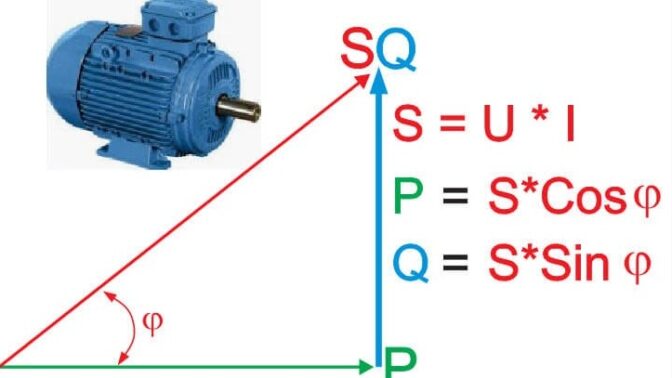


Inverter electrical cabinets are used in motor control, cooling systems, water supply, production conveyors,... What are the advantages of this type of control cabinet compared to other control cabinets such as MCC or PLC? Let's find out with BTB Electric through the following article.
An inverter electrical cabinet is a control cabinet that uses an inverter for the motor, adjusting the parameters of flow, rotation speed, pressure,... according to the installation parameters. In which, the inverter stabilizes the voltage, protects the load when overload or voltage drops. Inverter cabinets are currently used for production and storage line systems in factories and industrial workshops.
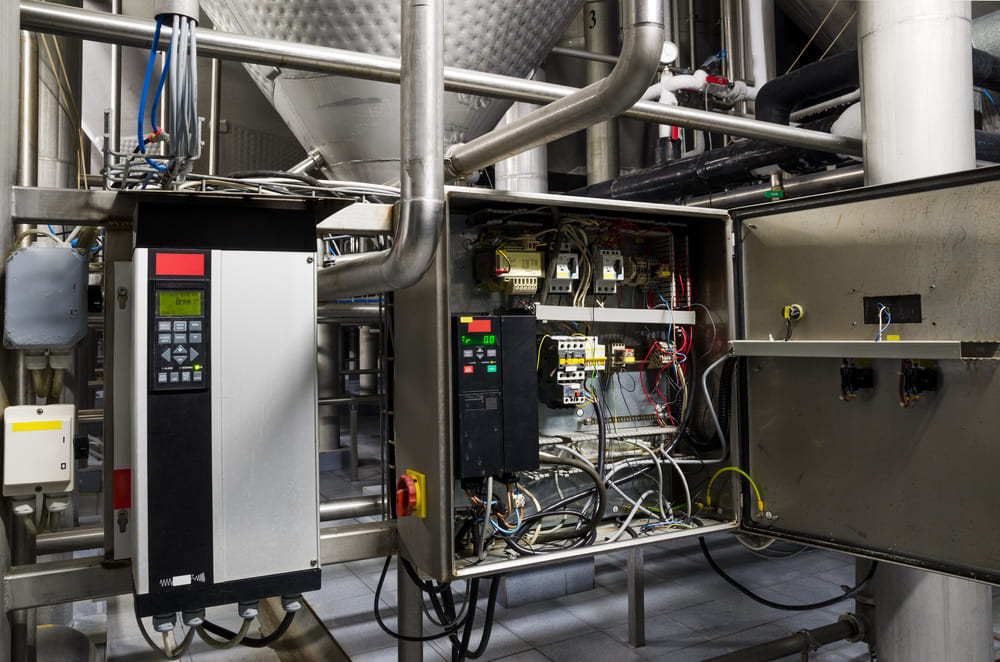
Inside the inverter electrical cabinet layout: inverter, contactor, MCCB, MCB, relay, busbar, conductor, meter, switch, indicator light, keypad,... This series of control cabinets is in the form of a rectangular cube, inside of which the compartment is separated according to the function of the devices.
The inverter cabinet has a motor control function that works on demand and has automation features. A pressure sensor can be installed to adjust the load according to the pressure and a speed sensor to control the rotation speed of the motor.
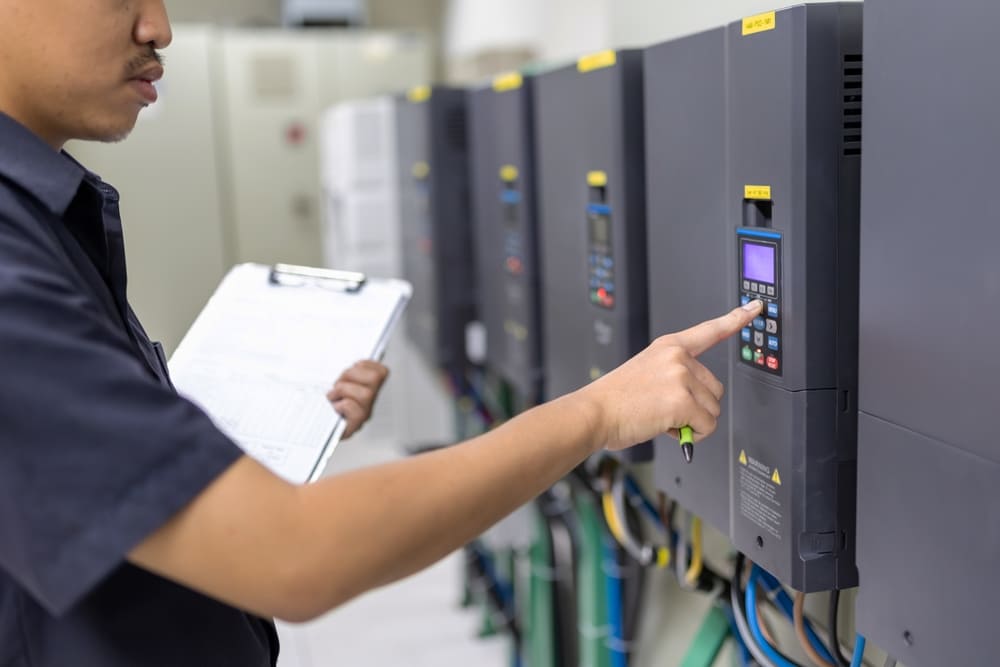
The inverter in the cabinet has the function of converting 50Hz frequency power to 60Hz. When using inverter cabinets in pneumatic systems, booster pump systems help to save energy, especially when incorporating input sensors. On the other hand, using the soft start method by inverter helps to avoid system voltage drops, keeping the engine running at a stable speed.
The inverter electrical cabinet has 3 main components: the inversion unit, the rectifier and the control CPU. The operating principle of the inverter cabinet is to change the input voltage frequency.
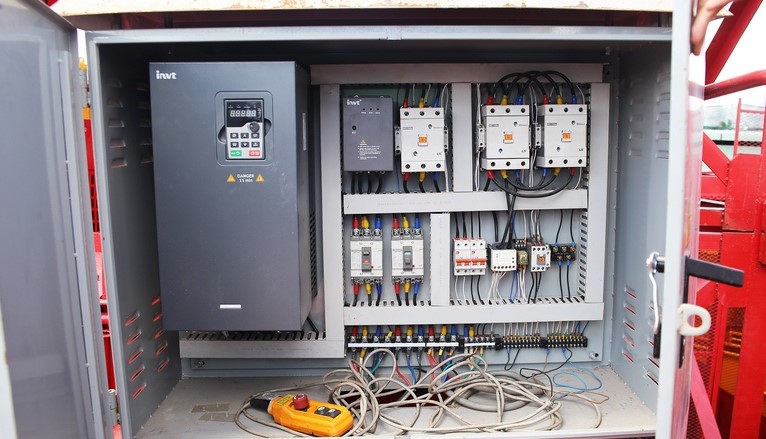
The input AC power supply will be rectified by the cabinet into a 1-way power thanks to the rectifier. Then the power factor cosφ of the inverter is at least 0.96, independent of the load. The IGBT (isolating gate bipolar transistor) then adjusts the pulse width so that the 1-way voltage is reversed into a 3-phase symmetrical AC voltage. Finally, the 3-phase voltage will be amplitude and stepless frequency adjusted according to the parameter set in the controller so that the AC voltage at the output varies according to the value corresponding to the load.
In addition, the inverter cabinet is also integrated with many controllers to be compatible with all types of loads, especially the PID load phase detector.
Inverter cabinet with inverter is the main component that is capable of changing the frequency of current and voltage supplied to the electric motor. From there, the speed of the motor changes, reducing power consumption. Using an inverter control cabinet brings the following benefits:
There are many types of inverter electrical cabinets, corresponding to the actual application in the system:
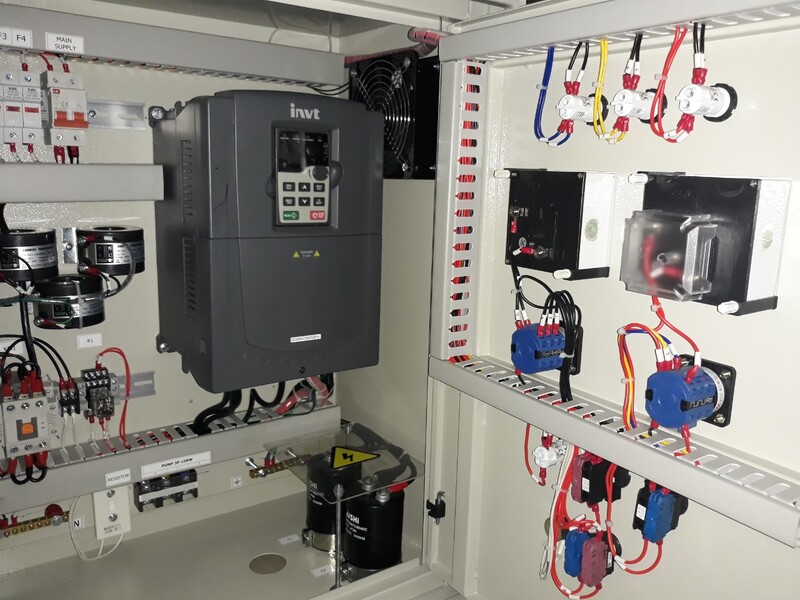
Inverter cabinets are used for motors, machines, and production lines in the following cases:
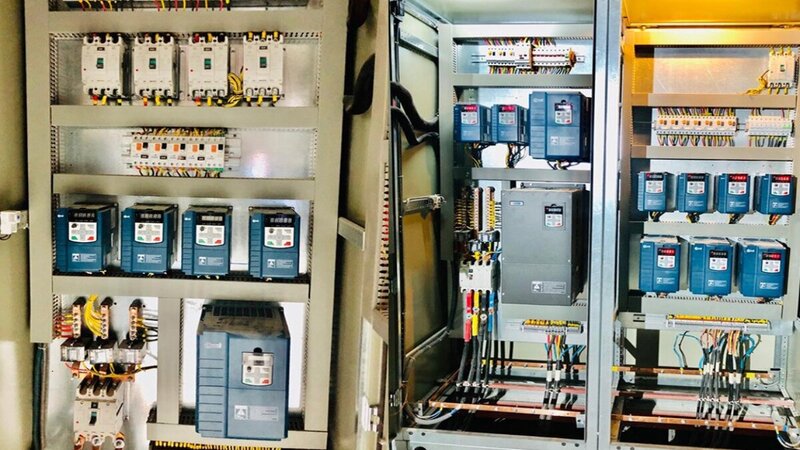
Currently, inverter cabinets have been applied in many civil and industrial power systems:
When operating, the inverter generates heat due to internal components, especially IGBTs, generating a lot of heat. Therefore, in order for the inverter to operate stably, when installing the inverter cabinet, it should be noted:
Inverter electrical cabinets with the ability to control automation and input voltage have been applied in many manufacturing, agricultural and commercial industries. Refer to more information about other types of electrical cabinets at: What is an electrical cabinet? Classification of residential and industrial electrical cabinets.