26-11-2026


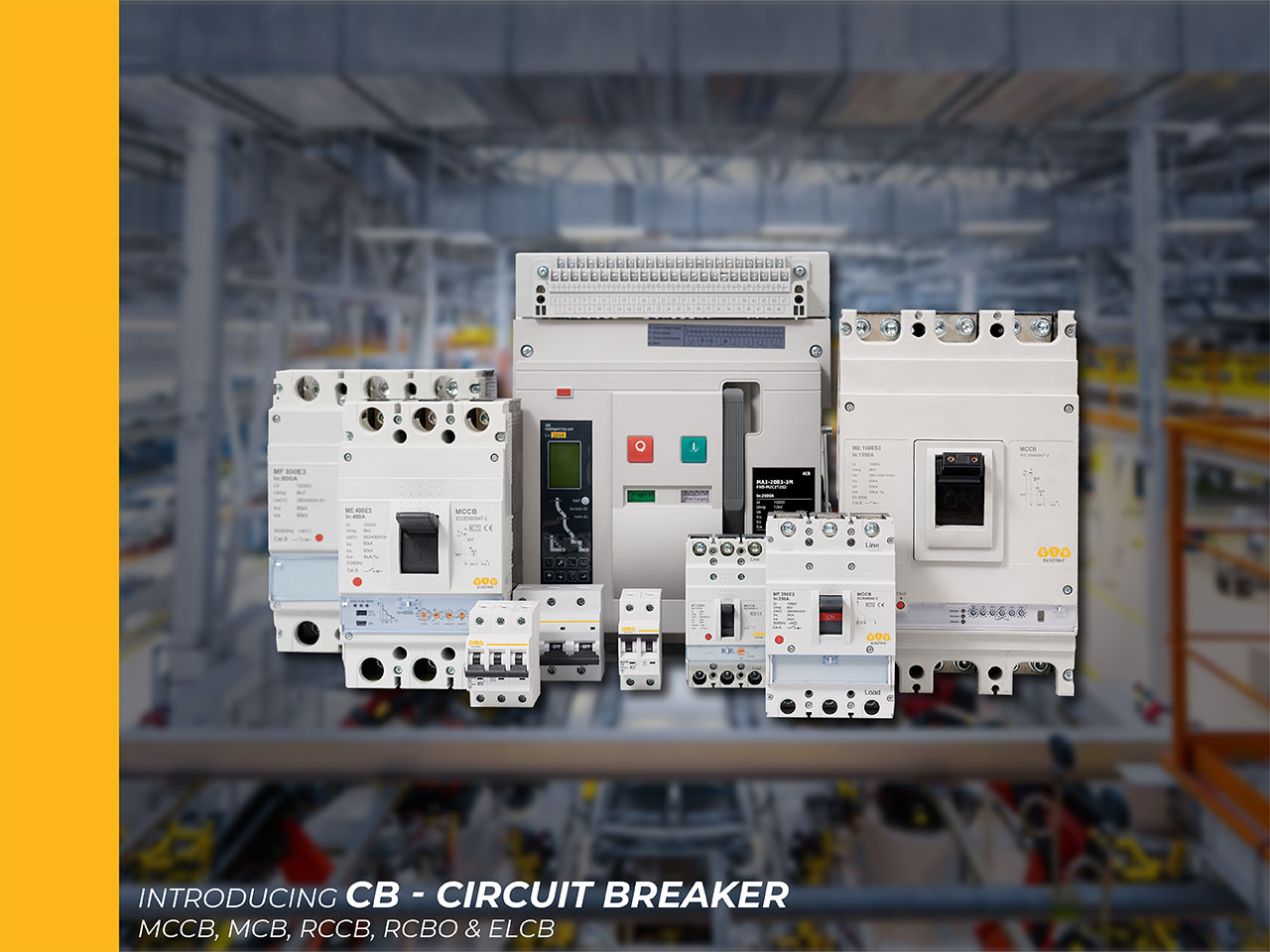
A circuit breaker is the first line of defense in any electrical distribution system, safeguarding critical infrastructure, industrial machinery, and residential buildings from overcurrents and short circuits. In this guide, we break down the types, working principles and key specifications to help you choose the right circuit breaker.
The main function of circuit breaker (CB) is to protect the system against overload or short circuit and prevent electrical leakage. Currently, there are many types of circuit breaker with multi-functions, in addition to the usual functions, some types can be anti-shock, lightning or have a reversing function. Circuit breaker is classified in several ways such as:
The basic function of circuit breaker is to protect electrical circuits against electrical system risks including.
Circuit breaker detects faults in current through parameters such as amperage (A), short-circuit current (kA) or leakage current (mA). As soon as it detects that the current encounters one of the above phenomena with a value exceeding the rated value, the CB will immediately shut down to prevent the current from flowing through, protecting the safety of the rear load equipment.
Common structural features of circuit breaker include: contacts, arc chute, actuator and tripping mechanism.
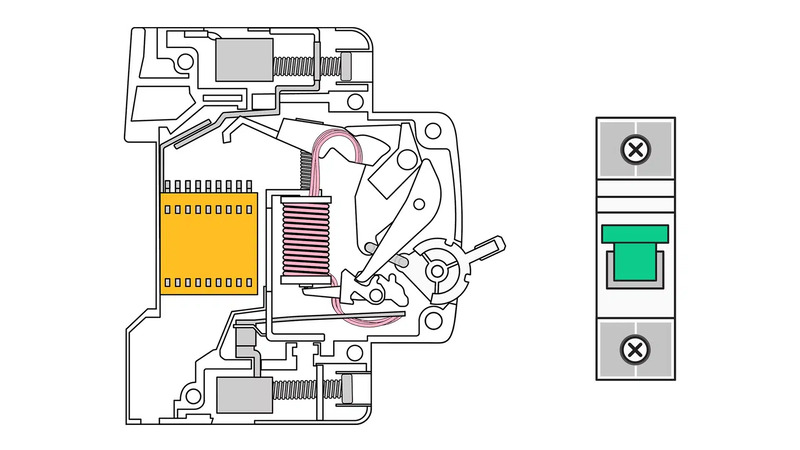
The contact in the circuit breaker performs a circuit closure and circuit breaker. Depending on the type of circuit breaker, the contact can be divided into 2 types (dynamic and static). The static contact is connected to the external wire leading into the circuit breaker. The dynamic contact is attached to an electromagnet and movable.
In order to handle electric arc chute in all operating conditions of the power system, two types of arc arrester equipment are commonly used: semi-sealed type and open type. The semi-sealed type is arranged inside the sealed case of the CB and has an air outlet hole. This type has a current cut-off limit that does not exceed 50KA. The open type is used when the cut-off current limit is greater than 50KA or the voltage is greater than 1000V (high voltage).
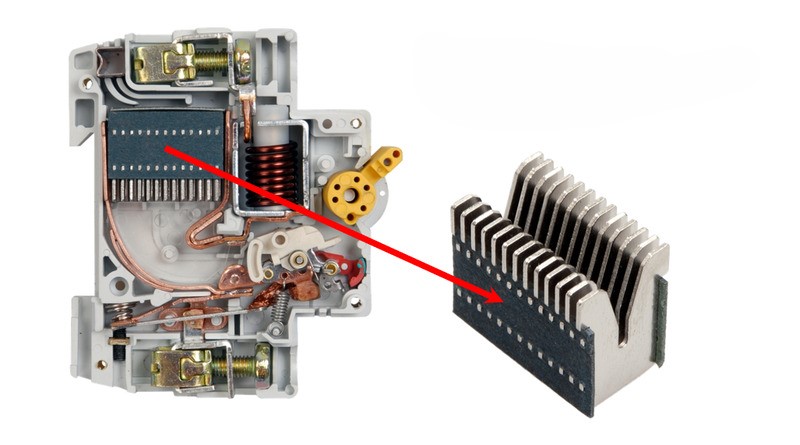
In the electric arc arrester chamber at Circuit Breaker, steel plates are used arranged in a network to divide the arc into several short sections, which helps to extinguish the arc effectively.
There are 2 ways to control the cutting drive mechanism, either by hand or by electromechanical (electromagnetic, electric motor):
The tripping mechanism is the signal transmission unit in the Circuit Breaker, acting on the circuit when it detects signs of overload or short circuit or voltage drop so that the circuit breaker automatically cuts off the power. There are two common types of tripping mechanism, electromagnetic systems and thermal relays.
Normally in circuit breaker up to 600A arrange both solenoid hooks and relay hooks. In the case of the voltage drop tripping mechanism, the electromagnetic type is used, which is a coil caught in parallel with the main circuit, with few loops and a small wire cross-section.
Here are the specifications of circuit breaker:
When selecting a circuit breaker in Vietnam, Singapore and Malaysia, compliance with electrical safety standards is non-negotiable. BTB Electric’s circuit breakers are strictly manufactured and tested according to:
Local regulatory compliance: Certified to global IEC standards, our products are fully equivalent to local codes (TCVN, SS and MS IEC), ensuring seamless compliance with EMA (Singapore) and ST (Malaysia) regulations.
The core working principle of a circuit breaker relies on two main tripping mechanisms to safely disconnect the circuit during a fault:
Once the fault is cleared, manual or motor-operated breakers can be easily reset to restore the power supply, unlike traditional fuses that must be replaced.
When classifying by the number of phases and poles, circuit breaker has types: 1 phase 1 pole, 1 phase 2 poles, 2 phase 2 poles, 3 phase 3 poles, 3 phase 4 poles.
When classifying by amperage (In), Circuit Breakers are divided by:
Circuit breaker is divided into many types for use for 1-phase electricity and 3-phase electricity. The most popular are the MCB, MCCB, RCCB, RCBO, ELCB and AFDD series. With each of the above types, there are many levels of rated lines, many different pole numbers and features:
| Breaker type | Main protection functions | Main phases / poles | Rated current (In) | Applications |
| Miniature Circuit Breaker (MCB) | Overload & short circuit | 1P, 1P+N, 2P, 3P, 4P | 1A - 125A | Residential & light commercial: Lighting circuits, standard sockets, DB boxes/Consumer units. |
| Moulded Case Circuit Breaker (MCCB) | Overload & short circuit | 2P, 3P, 4P | 16A - 1600A | Industrial & large commercial: Main switchboards, heavy machinery, motor protection, factory distribution panels. |
| Residual Current Circuit Breaker (RCCB) | Electric shock | 1P+N, 3P+N | 6A - 125A | Safety protection: Wet areas (bathrooms, kitchens, outdoor sockets). Must be paired with an MCB. |
| Residual Current Circuit Breaker with Overcurrent Protection (RCBO) | Electric shock, overload & short circuit | 1P+N, 3P+N | 6A - 125A | Space-saving DBs: High-demand dedicated circuits (water heaters, air conditioners), apartment units requiring comprehensive protection. |
| Earth Leakage Circuit Breaker (ELCB) | Earth leakage, overload & short circuit | 2P, 3P, 4P | Up to 800A | Industrial safety: High-capacity power networks, specialized high-humidity manufacturing environments, legacy installations. |
| Arc Fault Detection Device (AFDD) | Dangerous arc faults & others | 1P+N, 2P | Up to 40A | High fire-risk areas: Bedrooms, wooden structures, hospitals, aging wiring systems. |
Circuit breaker is an important electrical device, present in any low-voltage power system, from residential, commercial to industrial. The uses of circuit breaker include:
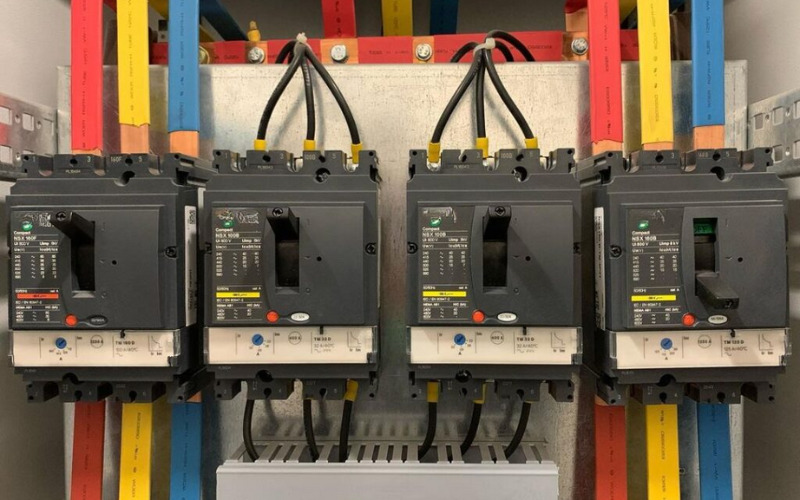
In industry, MCCB is mainly used, besides specialized switchgear. Equipped with an arc arrester, the MCCB series can interrupt the current up to thousands of Amps. If a MCB is used, choose a 3-phase type with a 10kA short-circuit cut-off current.

The majority of electrical equipment in industry is 3-phase electrical equipment. Although the system uses a neutral wire, because problems on the neutral wire are rare, only 3-pole Circuit Breaker type is usually used to save costs. For main breaker position, it is necessary to choose one with a high short-circuit cut-off current to ensure safety. For the branch breakers used for the device, it is possible to choose the type with medium cutting current.
The majority of electrical appliances in the home are 1-phase electrical appliances. In this case, it is common to use a 1-phase MCB to insert into the phase wire, while the neutral wire does not need to go through the MCB. On the other hand, because there is no arc arrester, the MCB can only cut off the current below 100A.
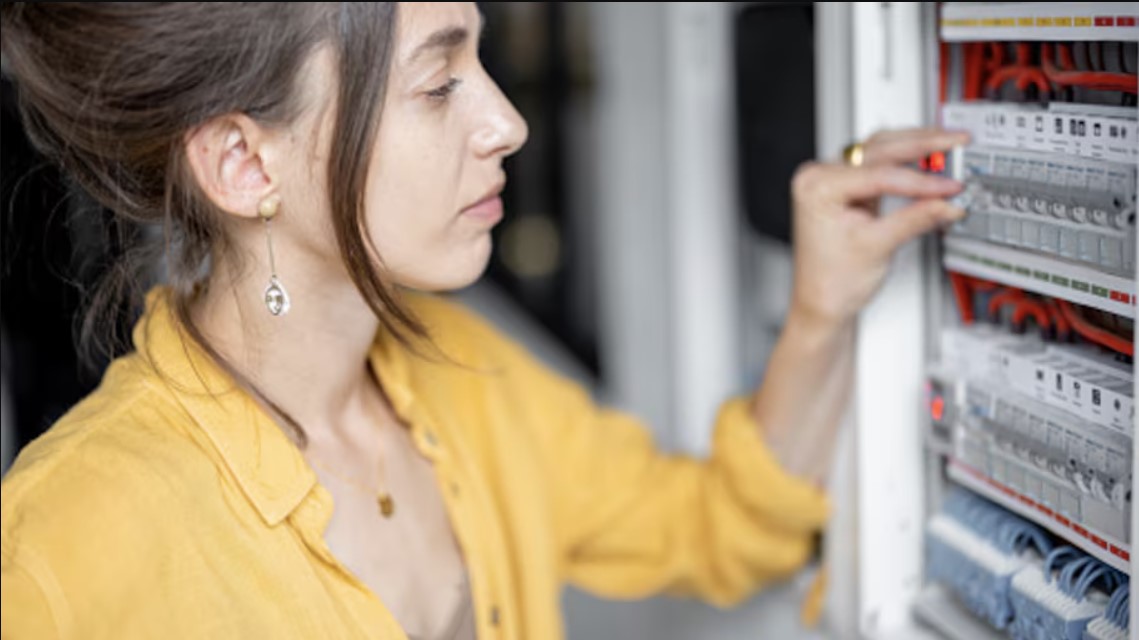
Normally, people will choose MCB with a short-circuit cut-off current of 6kA or 4.5kA to save costs. For some households with large electricity consumption and using 3-phase electricity, it is recommended to choose a total Circuit Breaker with a medium short-circuit cut-off current to ensure the safety of the power system and higher durability.
The use of high-power electrical appliances is becoming more and more common. To ensure the safety of the electrical system, devices with a high operating power of 1000W should be protected with their own anti-shock circuit breakers, such as heaters, air conditioners, induction cooktops,...
Question 1: Is there a difference between choosing a 1-phase CB and a 3-phase CB?
Answer: The 1-phase CB uses a 220V circuit for residential electricity, the 3-phase CB uses a 380V circuit for industrial electricity. Thus, it is necessary to understand the electrical system used to choose 1 of the 2 types of circuit breakers above.
Question 2: How to choose the suitable circuit breaker rating?
Answer: Calculate the total continuous current (Amps) drawn by all devices on the circuit. Select a circuit breaker with a rating 125% higher than the continuous load to prevent nuisance tripping and adhere to safety regulations.
Question 3: What is the function of circuit breaker in the domestic distribution board?
Answer: Circuit breaker automatically switches the circuit when there is an overload, short circuit, or electrical leakage.
Question 4: Which brand of circuit breaker should I use?
Answer: There are many quality CB manufacturers to choose from. For industrial power systems, priority is given to using Circuit Breaker from ABB, BTB Electric, Mitsubishi, Schneider,... For residential electrical systems, priority is given to using Circuit Breaker from LS, Panasonic, BTB Electric...
Above is a summary of information about circuit breaker, typical structure, principle of operation and application in life of this extremely important electrical device. For more information about circuit breaker, please continue to follow on the https://btb-electric.com/ website.